Year - Model
2009 - EXV42009 - EXV2
2008 - EXV4
2008 - EXV2
2007 - EXV4
2007 - EXV2
2006 - EXV4
2006 - EXV2
2005 - EXV4
2005 - EXV2
Battery Type/'s
-Flooded Lead Acid BatteriesBattery disconnect:
Shut offthe main battery disconnect located in the front right wheel well. “WARNING” Insome cases the vehicle can be setup, so this disconnect does not shut off thebattery pack power at the charger. If you do not have the correct equipment totest if power is present at the charger, then remove the battery cable from B-of the first battery in the battery pack or/and B+ of the last battery in thebattery pack. Also make sure both front battery charger inlet plugs aredisconnected from the main power grid.
In order to access the frontbattery in the pack the center console in the cab needs to be removed. Underthe center console are the tunnel covers which pull up. Below the cover youwill find the front battery. Note: Do not be mistaken, if the vehicle is ACdrive it will be equipped with a small 12-volt battery labeled U1L which wouldbe mounted in front of the battery pack inside the battery tunnel under thiscover. This battery only powers the 12-volt supply, and it has only 10-gaugewires going to it. All connections should stay connected to this battery. Thecables that need to be removed from the front battery are 1/0 in size.
In order to access the rear batteryin the pack it depends on the model of the vehicle. If it is an EXV4 the rearbattery is accessed inside the cab under the tunnel cover as described above.If it is an EXV2 it can be accessed through the flat bed access panel. If yourvehicle is built prior to September 2007, it will not be equipped with a flatbedaccess panel. In order to access the rear battery on a vehicle built prior toSeptember 2007 the flatbed will have to be removed which needs to be done tochange the charger as well. Also, when removing the positive cable also removethe two 10-gauge wires going to this post as well.
See Illustration ofbattery tunnel on last page.
How to access the chargeron the EXV2 Model:
In order toaccess the battery charger, the flatbed needs to be removed. In order to removethe rear flatbed, the four rear carriage bolts need to be removed. Also, insidethe cab of the vehicle at the underside of the roof of the vehicle you will seeeither two rubber straps or two aluminum brackets held on by screws. Eitherstyle you have they need to be removed. Also depending on the manufacturingdate of the vehicle you may have mounting screws at the front corners of theflatbed. In order to tell if you have these mounting bolts enter inside the caband behind the seats at the front corners of the flatbed you will find a 7/8”diameter hole drilled in the rear enclosure. At the bottom of each hole will bea screw with a #3 Phillips head bolt. Remove these two bolts if you have them.If you do not have these bolts there will not be a 7/8” diameter hole. Afterthis hardware is removed the flatbed can be lifted off the vehicle to gainaccess to the battery charger. Note: Your vehicle may be equipped with somesort of other option mounted to the flatbed which may or may not need to beremoved to lift the flatbed from the vehicle.
How to access the chargeron the EXV4 Model:
In order to access the batterycharger, the rear pickup box needs to be removed. To remove the rear pickup boxfirst the rear enclosure needs to be removed. To remove the rear enclosure, enterinto the rear of the cab and you will find screws that hold the enclosure tothe rear pillar. Remove these screws. After the screws are removed theenclosure should become loose and can be removed. Next is to unbolt the pickupbox. The box is held down by four carriage bolts which can be found by liftingup the box floor mat. Remove these bolts. Also, the box is held down by eightother bolts which can only be accessed by removing the two rear seats. Theseats are removed by removing the four mounting nuts which are accessed throughthe seat base cut out at the front of the seat base. After removing the seats,you will find four 1/4 -20 bolts on each side of the vehicle. Remove all eightbolts. Next in order for the box to be lifted off the vehicle the plastic sailpanels located on each side of the vehicle are held to the pickup box by onescrew on each side. Remove these screws. Also to get enough clearance to liftthe flatbed high enough to remove it the bottom two black rivets that hold theplastic sail panel to the rear pillar must be drilled out with a 3/16” rivet.Next is to disconnect or remove the taillight connector from the taillightlens. After this the pickup box can be lifted off the vehicle to gain access tothe battery charger.
- How to mount new charger:
Theexisting battery charger can be removed by unbolting the four nuts that holdthe charger to the vehicle. Depending on the manufacturing date of your vehiclethe AC inlet to the charger may be two independent 14/3 cords that have plugson them which are plugged into the battery charger inlet plugs or it may bewired with one 14/4 power cord that is hardwired inside the battery charger. Ifyou have the two independent 14/3 power cords unscrew the plug retainers andunplug the cords form the charger. If you have the 14/4 single power cord justcut the cable from the battery charger. Next is to disconnect the DC side ofthe charger. The DC wiring for the charger will be a power cord with two 10-gauge wires. Depending on when your vehicle was built these two 10-gauge wiresmay either go to a gray connector which would be just a few feet from thebattery charger or there will not be a connector. We started using thisconnector in the beginning to easy assembly, but dirt can get into the connectorcausing connection and melting issues. If you have the connector, we recommendthat you cut the two 10-gauge wires on the vehicle side of the connector so theconnector would end up being removed. If you do not have this connector, justtake and cut the 10-gauge wires so they have enough length to reach the newcharger wire. Best to cut it as long as possible and make a second cut to thecorrect length when wiring the new charger.
To installthe new battery charger it will mount in the same location as the charger youjust removed. It is not critical on the mounting of the charger just make surethe charger is mounted flat against the charger tray. The new battery chargerneeds the aluminum charger tray for extra heat sink. To make sure you haveenough wire length it may be best to have the DC side of the new batterycharger pointing towards the passenger’s side of the vehicle. Drill new holesin the charger mount tray using the new charger mount holes as a template. Boltcharger to battery tray using the supplied ¼-20 hardware.
Wiring side to battery charger
To wire theDC side of the battery charger you need to first determine which of the two 10-gauge wires is positive or negative. “WARNING” Do not designate red aspositive. Not all vehicles were wired with red as positive. Also, vehicles without the gray connector described above will have white and black colored wires.The only way to know which wires are positive and negative is to trace wherethey go. The positive wire is the easiest to trace. It should be running to B+of the rear battery. After you discover which wire is positive the other 10-gauge wire is negative. As for the DC wiring of the new battery charger red ispositive and white is negative. Take and splice the wiring together positive topositive and negative to negative. You can use the supplied 10-gauge buttconnecters and heat shrink or your own other preferred method.
Decision to be made beforewiring the AC side of the battery charger
A decision needs to be made whetheryou want to charge the vehicle with 120 volts or 220 volts. The new charger canbe either/or but for safety reasons it should be wired only to one of the inletplugs. With the new battery charger is makes no difference on which voltage youpower it with. With either power source it will perform exactly the same. Thepower inlet that you wish not to use can be removed from the vehicle all theway up to the front bumper. Note: If your vehicle is equipped with an aluminumunpainted bracket at the front bumper where the inlet plugs mount to, a singlehole bracket can be purchased to replace the dual hole bracket if preferred. Ifno bracket is present and the front bumper has holes drilled into it, the frontbumper would need to be replaced if you preferred a single hole.
Wiring AC side to batterycharger that has two 14/3 power cords
For vehicles wired with two 14/3power cords one of the cords should have been removed from the decision youmade above. The remaining cord needs to be cut and spliced to the 14/3 AC inletcord of the battery charger. Black to black, white to white and green togreen. You can use the supplied 14–16 gauge buttconnecters and heat shrink or your own other preferred method. The other sideof the battery charger cord plugs into the charger and the metal clip flipsdown to hold the cord in place.
Wiring AC side to batterycharger that has one 14/4 power cord
For vehicles wired with a single14/4 power cord you will have to remove the inlet plug from the front bumperyou wish not to use. The black and white wiring going to the inlet plug needsto be removed as it is only jumping between the two plugs. The red wire shouldbe capped off. At the charger the 14/4 cord needs to be cut and spliced to the14/3 AC inlet cord of the battery charger. Black to black, white to white andgreen to green. The red wire of the 14/4 cord needs to be capped off. You canuse the supplied 14-16 gauge butt connecters and heat shrink or your own otherpreferred method. The other side of the battery charger cord plugs into thecharger and the metal clip flips down to hold the cord in place.
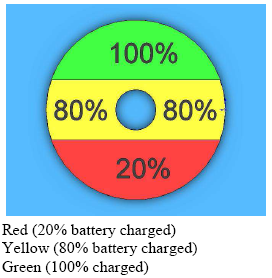
Battery charger LED charge status indicator
The battery charger status indicator lightcan be installed in different locations depending on how much work the installchooses to put into it.
The easiest method is to just tiestrap the light to a component in the rear pointing to the underside of thevehicle so that at any given time the operator could look under the vehicle tomake sure the charger is on.
The secondapproach would be to drill a hole in the rear tail panel. Cut the wires to thelight, insert the light into the hole and re-splice the wires back together.
The thirdapproach would be to cut the wires to the light and extend them so the lightcan be installed into the front of the vehicle. If light was installed behindthe front hood grill, then the operator could make sure right away that thecharger has turned on.
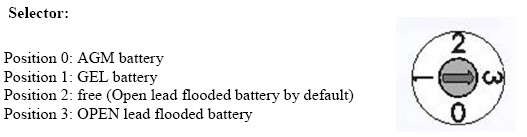
Battery type selector switch
The new battery charger has aselector switch, and each switch selection works with different types ofbatteries. The selector switch is located under one of the rubber seal plugsfound on the DC output side of the battery charger. Remove the rubber seal witha flat screwdriver and make sure the charger is set to the correct switchsetting that correlates to the type of batteries used in your vehicle. Note:Position 2 and 3 are the same but use position 3 for flooded batteries. Theswitch can be changed by using a small flat screwdriver and inserting it intothe arrow (center) of the switch.
2 Pin Connector not beingused
The 2-pin male connector on the DCoutput side of the battery charger does not need to be used. It is intended forvehicle anti-drive. So that at any time the battery charger was plugged into ACvoltage the connection between these two wires would become open. If you wishto wire the vehicle with anti-drive one thing to keep in mind is the internalanti-drive switch of the charger cannot exceed 24 volts DC and 10 amps. Ifpower exceeds 24 volts or/and 10 amps the charger will not operate, andreplacement of charger will be needed also warranty would be voided. If youwish to setup your vehicle with anti-drive, you can contact e-ride and we canexplain some different ways it can be done.
- When charger is not connected neither the battery nor to main supply then relay is idle (contact open)
- When charger is connected to battery: Relay is acting (contact closed)
- When charger is connected to battery and main supply, then relay is idle (contact open)
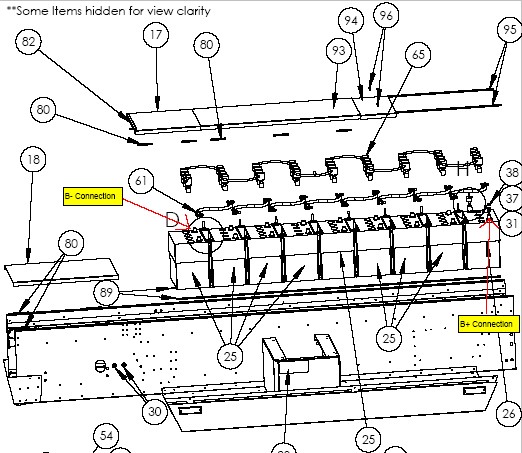
Battery tunnel with battery image.